
How to Search Fulton County Court Records
The fastest way to look up a Fulton case is to start at the official Fulton Clerk eServices page. That page links to Smart Search on the public Tyler Portal, re:SearchGA, eCertification, criminal eFiling, court calendars, and deed search. Smart Search is the public index for Superior Court and Magistrate Court case files in Fulton County. It returns party names, case numbers, court, judge, filing date, status, and docket events when access is allowed.
Before you start a search, gather the case number, party name, citation or warrant number, and approximate filing year. Spelling matters for common Atlanta-area names. A search by exact case number cuts through most false matches.
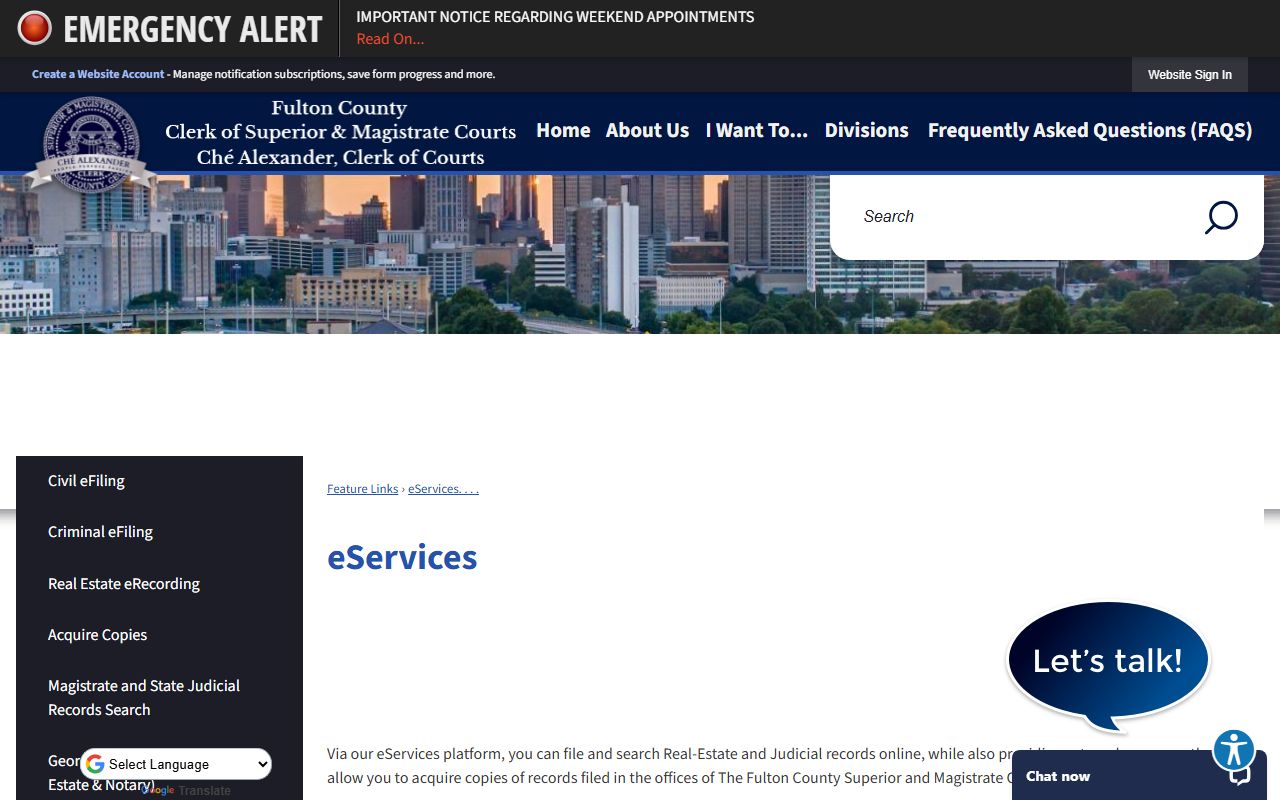
The Fulton Clerk eServices page is the official menu of online court tools for Fulton County Court records and helps you avoid private ad pages. Use the steps below for a clean lookup.
- Open the Fulton Tyler Portal and choose Smart Search.
- Enter a case number if you have one. If not, enter a party name as "Last, First."
- Narrow by court, case type, or date range when those filters appear.
- Open the case row to review docket entries, hearings, and judge.
- Use eCertification if you need a certified copy of a Fulton court record.
The eServices index is the most reliable lead-in to Fulton County Court records search tools. The screenshot below from the Fulton Clerk eServices page shows the lineup of public-access systems run by the elected Clerk of Superior and Magistrate Courts.
From that menu, Smart Search routes to the Tyler public portal that Fulton uses for Superior and Magistrate Court records. A look at the Tyler Portal entry screen shows the search box that returns case results when the record is public.
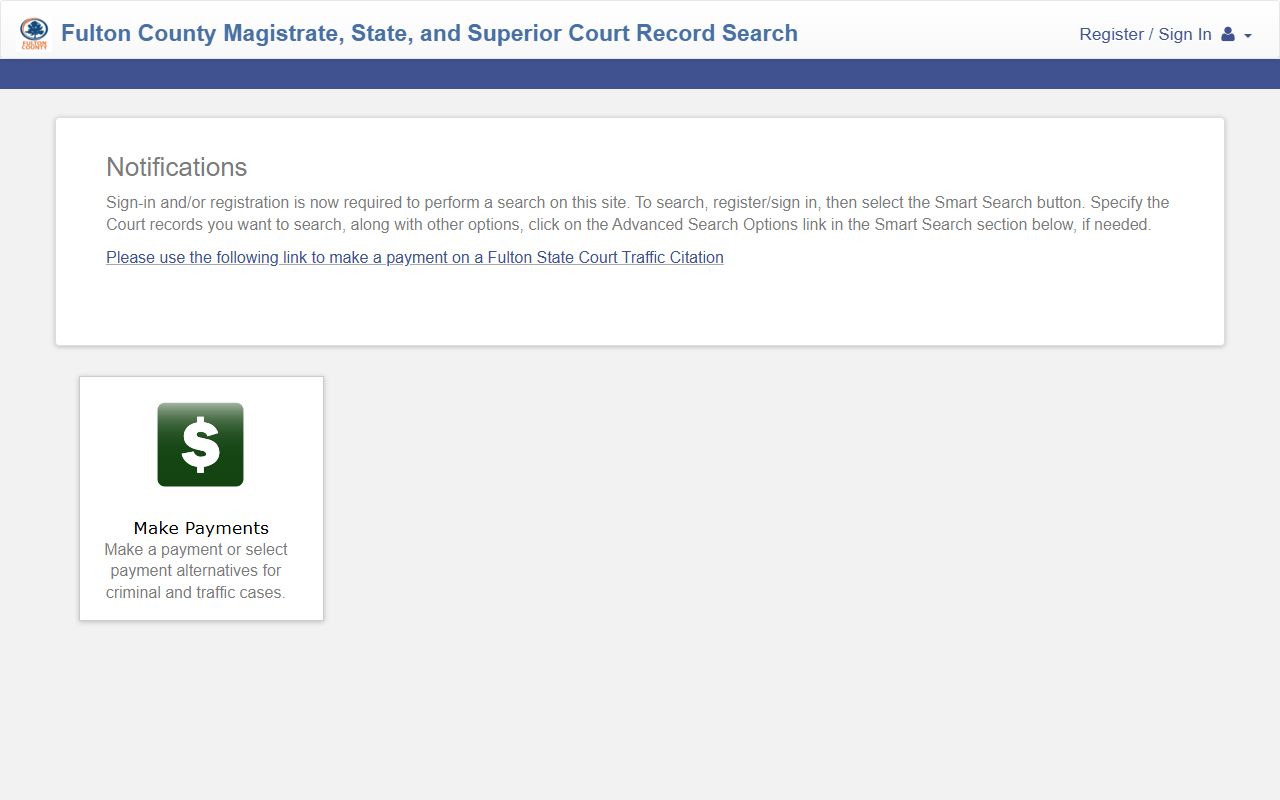
Note: Some records require login, payment, or in-person review even when the index entry is visible online.
The Fulton County Court System
Fulton County runs five trial courts. Superior Court is the main court for felonies, divorce, equity, land disputes, and major civil cases. State Court handles many misdemeanors, traffic cases, and civil suits inside its limits. Magistrate Court handles small claims, dispossessory or eviction cases, warrants, first appearances, and preliminary hearings. Probate Court handles wills, estates, guardianships, conservatorships, marriage licenses, and weapons carry licenses. Juvenile Court handles delinquency, dependency, and other youth matters under tight access rules. Several cities inside the county also run municipal courts.
The county sits in the Atlanta Judicial Circuit. Most appeals from a Fulton trial court go to the Court of Appeals of Georgia, with some routes to the Supreme Court of Georgia by law.
Case flow: Magistrate first appearance › State or Superior Court trial › Court of Appeals of Georgia › Supreme Court of Georgia.
| Court | Jurisdiction | Case Types |
|---|---|---|
| Fulton Superior Court | General jurisdiction trial court | Felonies, divorce, equity, title to land, major civil, family |
| Fulton State Court | County state-level trial court | Misdemeanors, traffic, civil cases inside its limits |
| Fulton Magistrate Court | Limited civil and early criminal stage | Small claims, dispossessory, warrants, first appearances |
| Fulton Probate Court | Wills, estates, guardianship, licensing | Estates, guardianship, conservatorship, marriage, weapons carry |
| Fulton Juvenile Court | Youth matters under state law | Delinquency, dependency, CHINS, family preservation |
A look at the Fulton Superior Court homepage shows the main entry to Superior Court news, judge directory, and division pages.
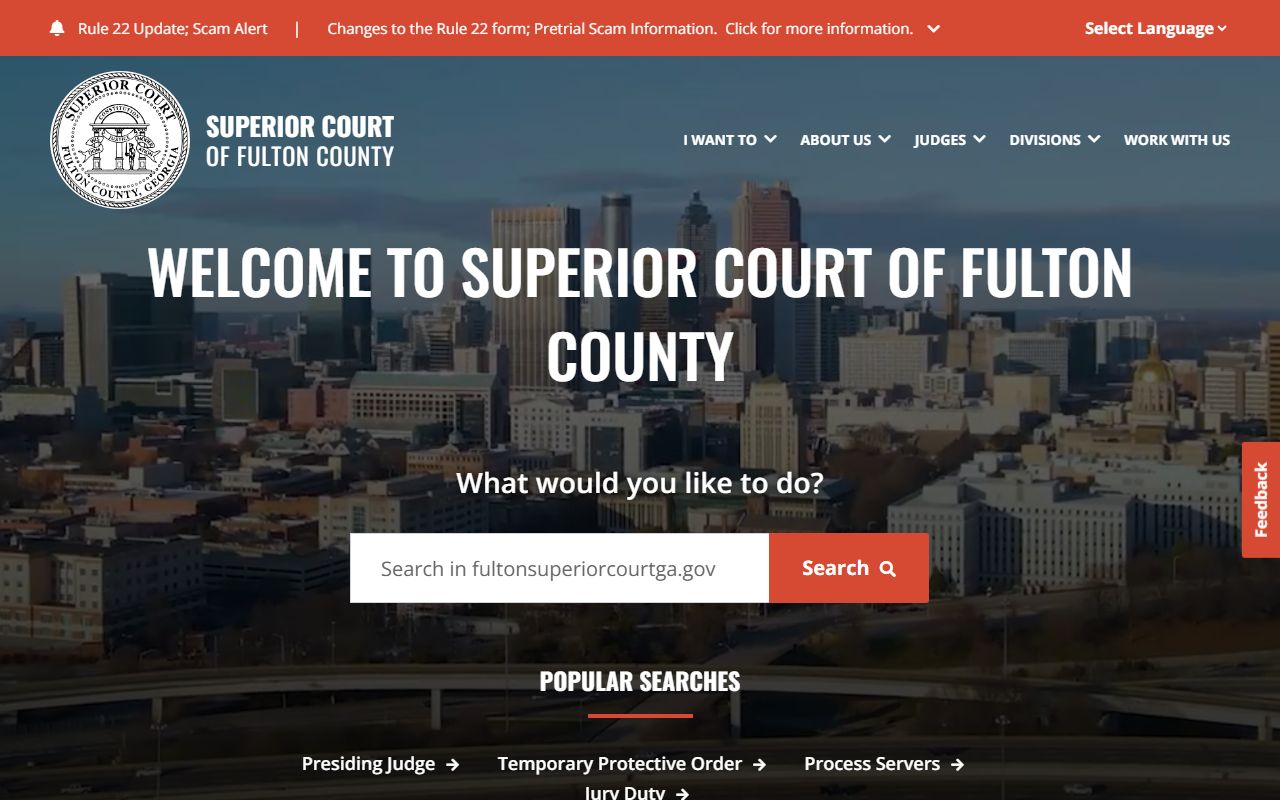
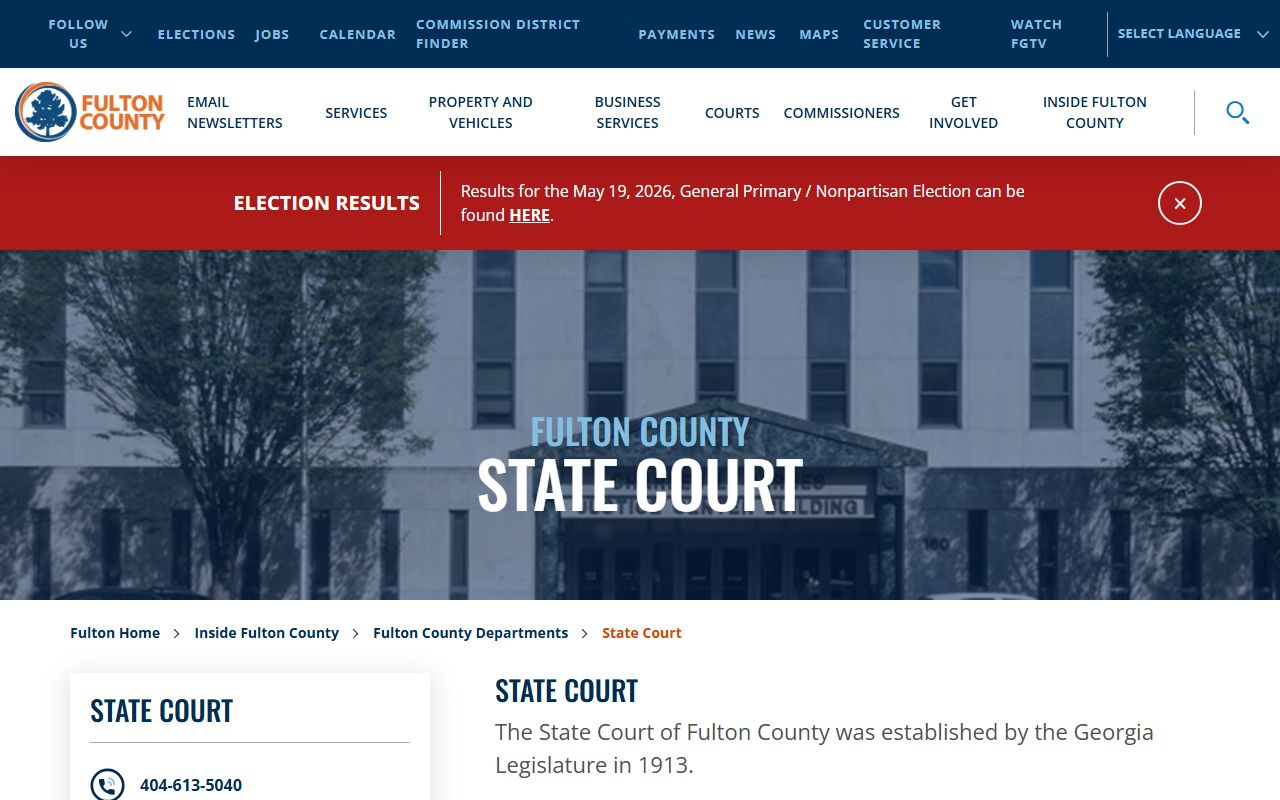
That site is separate from State Court. The Fulton State Court page covers misdemeanor, traffic, and civil State Court work and is the right starting point for State Court records.
Fulton County Courthouses
The main Fulton court campus sits in downtown Atlanta near Pryor Street, Mitchell Street, and Central Avenue. Superior Court, State Court, and Magistrate Court all share that area. Probate Court has its own office in the same downtown block. Juvenile Court is in its own building a short walk away. Visitors should always check the address on a hearing notice before driving in.
Fulton County Justice Center Tower
185 Central Avenue SW
Atlanta, GA 30303
The Clerk of Superior and Magistrate Courts runs the records side of Superior and Magistrate cases. The Clerk homepage is the source for staff contacts, fee tables, request forms, and court calendars.
Types of Fulton County Court Records
Fulton County Court records cover many case types because the county runs so many courts. Civil records track lawsuits, contracts, garnishment, and personal injury cases. Criminal records track arrests, felony cases, and misdemeanor cases. Family records track divorce, custody, child support, and protective orders. Probate records track estates, guardianship, and marriage licenses. Traffic records track citations from Fulton State Court and from city courts.
Some courts publish more online than others. Adult Superior and Magistrate dockets are usually open. Juvenile, adoption, sealed, and protected files are not.
- Criminal records: arrests, indictments, plea, sentence, and disposition entries from Superior and State Court.
- Civil records: complaints, answers, motions, orders, and judgments in money and contract cases.
- Family records: divorce decrees, child support orders, custody, and protective orders.
- Probate records: wills, estate files, guardianship, and conservatorship cases.
- Traffic records: Fulton State Court citations, fines, pleas, and license consequences.
- Magistrate records: small claims, dispossessory, warrants, and first appearance entries.
- Juvenile records: restricted under state law; not part of public adult search.
What Fulton County Court Records Show
Open the case detail page on Smart Search and you will see the same core fields no matter the court. Each row points to a step in the case. The chart below maps the most common fields you will read on a Fulton public court record.
| Field | What It Shows |
|---|---|
| Case Number | The unique ID the court uses for this file. Format varies by court. |
| Filing Date | The date the case opened on the court's docket. |
| Court / Division | Superior, State, or Magistrate, plus civil, criminal, family, or other division. |
| Judge | Assigned judge or magistrate, if the case is set on a calendar. |
| Parties | Plaintiff or state, defendant, petitioner, or respondent, with attorney info. |
| Charges or Cause | Criminal counts and statute, or the civil cause of action. |
| Docket Entries | Date-stamped list of filings, hearings, motions, and orders. |
| Disposition | Final outcome: plea, guilty, dismissed, nolle prosequi, judgment, decree. |
| Bond / Financials | Bond amount, fines, fees, restitution, or money judgment if entered. |
The same public portal also exposes a set of search fields. The table below shows the typical fields used on the Fulton Clerk Tyler Portal Smart Search box. Field options can change with portal updates.
| Field Label | Type | Required | Notes |
|---|---|---|---|
| Smart Search | Text | No | Search by case number, party, attorney, or business name. |
| Case Number | Text | No | Use the full case number from a notice or docket. |
| Party Name | Text | No | "Last, First" works well; try business legal names too. |
| Court | Dropdown | No | Filter by Superior or Magistrate Court when shown. |
| Case Type | Dropdown | No | Civil, criminal, family, dispossessory, warrant, or other. |
| Date Range | Date | No | Filing date or event date range. |
| Sign In / Register | Link | No | Some document views need an account. |
Public Access Laws for Fulton County Court Records
Georgia's Open Records Act sets a strong baseline for access to records held by public agencies. The Fulton County Sheriff's Office, Clerk's office, and other county departments work under that law. Court files also follow court rules and case law, so some records are open and some are sealed. Court access disputes often run through a motion in the case rather than a simple agency request.
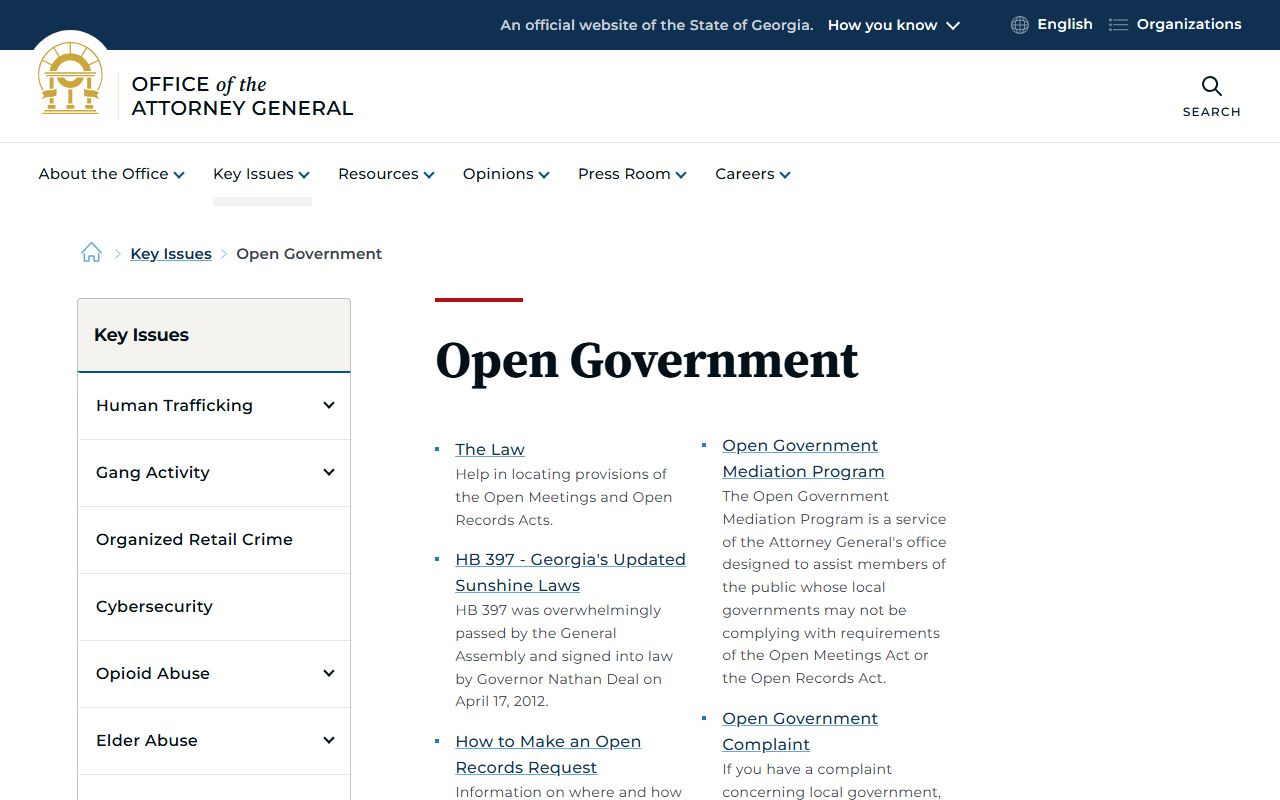
The state Attorney General's Open Government resource is the starting point for requests to county agencies. A look at that page shows the official Georgia framework for open records and meetings.
The links below tie the most important statutes to plain-English summaries so a Fulton requester can pick the right tool.
Key Georgia Statutes:
O.C.G.A. § 50-18-70 : sets Georgia's open-records policy. Public agency records are presumed open unless a statute or court order says otherwise.
O.C.G.A. § 50-18-71 : sets response times, copy fees, and search fees that public agencies may charge.
O.C.G.A. § 50-18-72 : lists exemptions for active investigations, medical files, security plans, and personal data.
O.C.G.A. § 35-3-37 : sets the rules for criminal record restriction and sealing under GBI / GCIC.
O.C.G.A. § 15-9-30 et seq. : sets Probate Court jurisdiction over estates, marriages, and guardianship.
Note: An online "no result" does not always mean no case exists; some Fulton matters are sealed or held in a court not covered by the public portal.
Restricted and Confidential Fulton Court Records
Some Fulton County Court records are not part of public search. Juvenile cases are limited by state law. Adoption files are confidential. Sealed criminal and civil filings stay closed without a court order. Mental health and competency files include medical data that the law protects. Grand jury records stay secret until an indictment is filed. Family violence and protective order files often redact addresses and minor names.
Georgia uses the term "record restriction" rather than "expungement" for many eligible arrests and dispositions. Eligibility under O.C.G.A. § 35-3-37 turns on the charge, the outcome, and the waiting period. A successful restriction limits public access but does not erase the record for law-enforcement use. To unseal a court file, a person usually files a motion in the case and shows legal grounds.
Fulton County Specialty and Problem-Solving Courts
Fulton County runs accountability and treatment courts that combine judicial review with treatment, case management, and supervision. Drug Court is the most common model. Eligible adults with substance use disorders take part in regular hearings, treatment, drug testing, and case management while a judge tracks progress. Completion can lead to reduced jail time or a better plea outcome.
The county also runs a Mental Health Accountability Court tied to behavioral health services. Eligibility depends on diagnosis, charge, risk, and program capacity. The official Fulton accountability court page covers current program contacts.
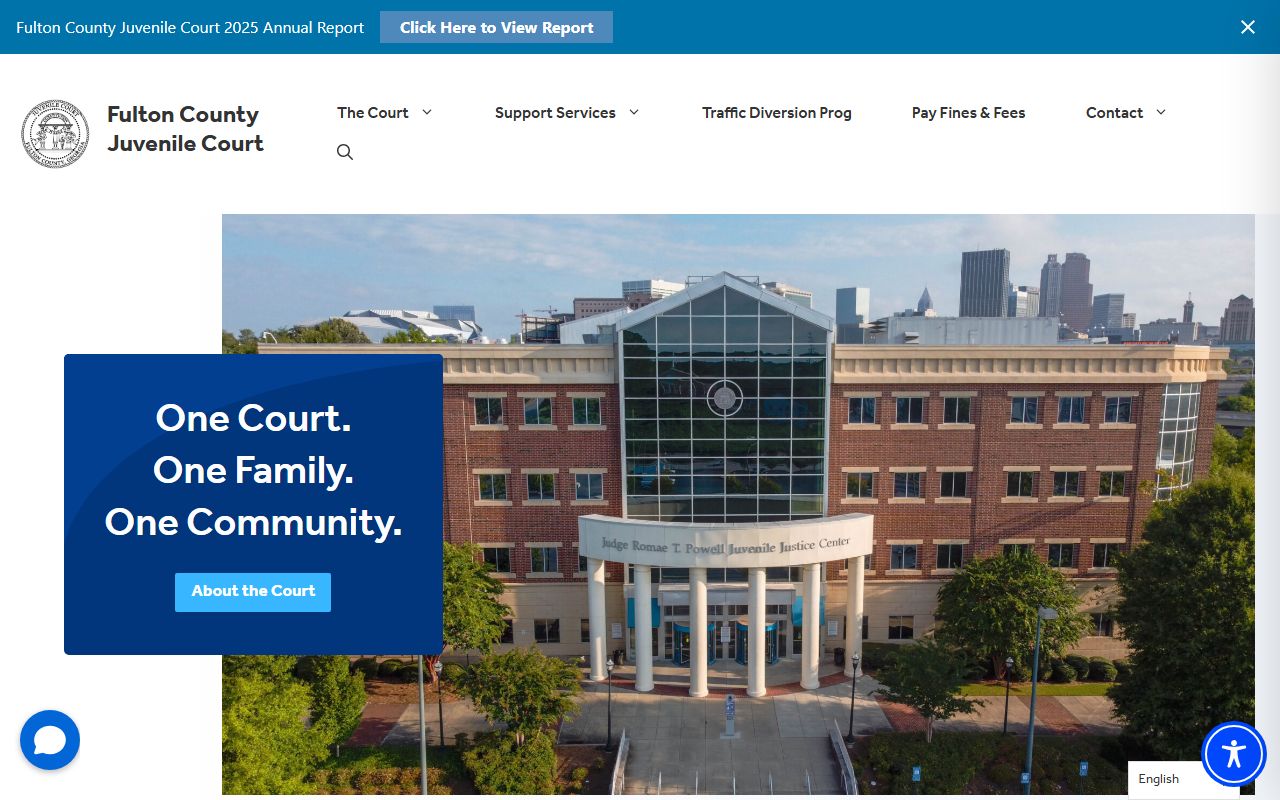
Juvenile Court runs its own specialty calendars for youth diversion, dependency, and family treatment, and Superior Court Family Division offers paths for self-represented parties. The Fulton Juvenile Court site is the starting point for that court.
Fulton County Sheriff and Jail
The Fulton County Sheriff runs the main county jail at 901 Rice Street NW in Atlanta. The jail holds people who are awaiting first appearance, bond, indictment, trial, or transfer. Booking entries reach the public roster after intake, photo, prints, charge entry, and medical screening. The Sheriff's Office is the main custodian of jail custody and visitation rules.
Public custody status is available through the official inmate search. The Sheriff's Office and Jail page covers visitation, mail, telephone, commissary, and bonding rules. For deeper details on the search portal and the booking process, see Fulton County inmate records. To look up active warrants and the court that issued each warrant, see Fulton County warrant records. To check who has left custody and how release works, see released inmates.
Note: A jail charge line is a booking entry, not a conviction; the court docket is needed for plea, verdict, or sentence.
Marriage, Divorce, and Probate Records
Marriage licenses are handled by Fulton County Probate Court, not by the Clerk of Superior Court. Divorce cases are filed in Superior Court Family Division, and certified divorce decrees come from the Clerk of Superior and Magistrate Courts. Estates, wills, guardianship, and conservatorship cases all run through Probate Court. For more detail on each path, see marriage and divorce records and probate records.
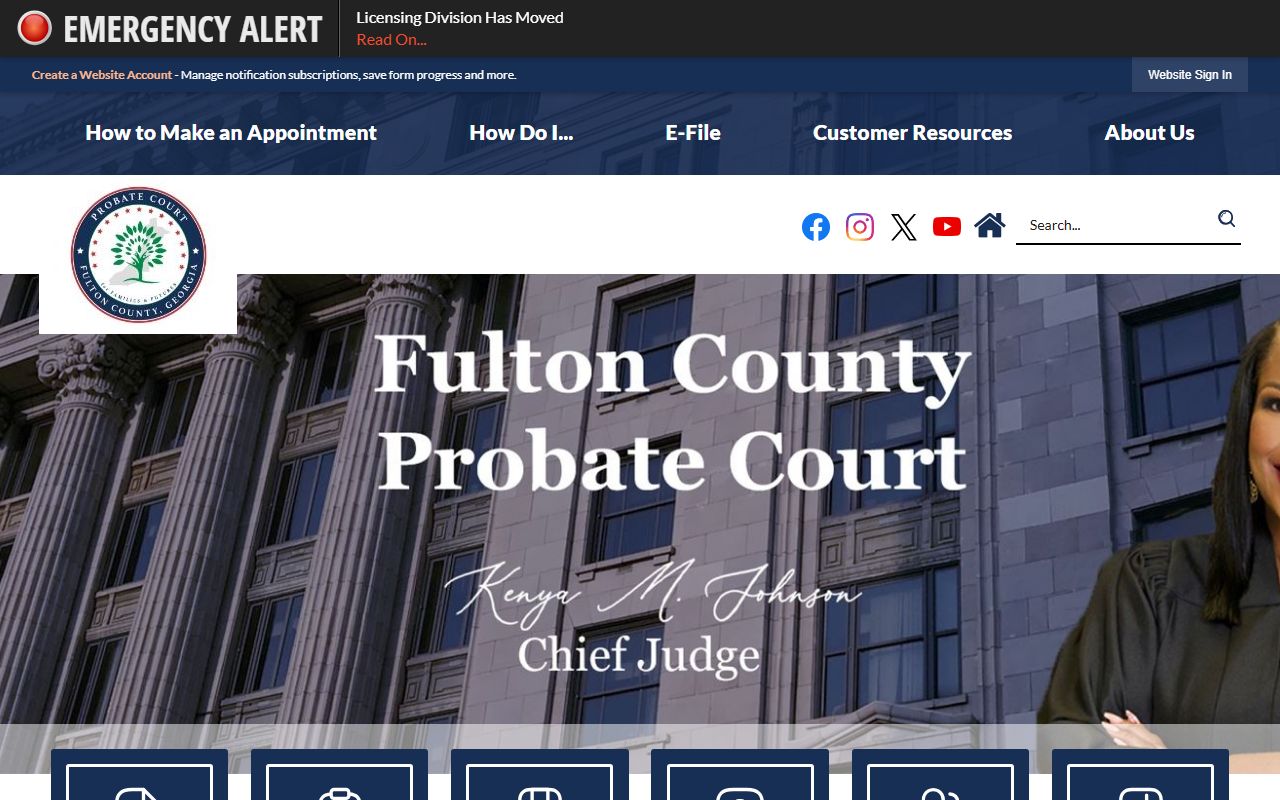
A look at the Fulton Probate Court homepage shows the main probate menu, including the Records Division, estate filings, and marriage license info.
- Testator
- The person who made the will. Their wishes drive the estate.
- Executor
- The person named in a will to settle the estate under court oversight.
- Intestate
- A person who died without a valid will. State law sets who inherits.
- Conservator
- A person the court names to manage finances for someone who cannot.
- Guardian
- A person the court names to make personal decisions for a ward.
Fulton County Court Records Fees
The Fulton Clerk fee schedule lists copy fees, filing fees, and service fees for Superior and Magistrate cases. Certified copies cost more than plain copies because the Clerk signs and seals them. The most-used items appear below; the full list is on the Fulton Clerk fee schedule page.
| Item | Amount |
|---|---|
| Certified or exemplified copy, first page | $2.50 |
| Certified or exemplified copy, each added page | $0.50 |
| Plain copy, no clerk help | $0.50 per page |
| Plain copy, clerk assisted | $1.00 per page |
| Computer-generated public-record copy | $2.50 per page |
| Superior Court general civil filing | $218.00 |
| Divorce filing | $223.00 |
| Magistrate small claims suit | $60.00 |
| Magistrate dispossessory against tenant | $60.00 |
| Magistrate warrant application | $20.00 |
How to Read a Fulton County Court Record
A docket entry is a one-line summary of a single court event. A "Motion" line is not a ruling; it is a request to the court. An "Order" line is the judge's written act. "Disposition" is the final outcome of a charge or claim. "Nolle prosequi" means the state chose not to prosecute that count. "Dismissed" means the case ended without conviction or judgment.
A charge in a Fulton case is not a conviction. The case may end in a plea, a trial, a dismissal, or a deferred path. To prove an outcome, ask the Clerk for the final order or certified disposition, not just a print of the docket screen. For employment, school, immigration, or licensing use, a certified copy is the safer choice.
Accuracy and Update Limits
Public Fulton court data may lag behind the courtroom. A judge can rule in the morning, but the entry may not post until the Clerk processes it. Some cases are sealed, transferred, or held in a court that the public portal does not cover. Names with hyphens, suffixes, or short nicknames can hide a match.
Note: Always confirm a date, charge, or outcome with the Clerk, the court, or your attorney before you rely on a Fulton public record.
History of Fulton County Courts
Fulton County was created in 1853, with Atlanta as the county seat and Georgia's capital. Court work in Fulton has grown with the metro area, from a small county courthouse role into a large urban system with Superior, State, Magistrate, Probate, Juvenile, municipal, and federal court presence inside the county. The downtown court campus near Pryor Street reflects that growth.
Technology has shifted Fulton from paper counters to the Tyler / Odyssey ecosystem, with Smart Search for public lookup, re:SearchGA for statewide research, eFileGA for filing, and eCertification for certified copies. The state-level Judicial Council and Administrative Office of the Courts sets common rules and resources used in Fulton.
Where Magistrate Court Fits
Many Fulton residents first meet the court system through Magistrate Court. The court handles small claims, eviction or dispossessory cases, warrant applications, first appearance hearings, and preliminary hearings. The Fulton Magistrate Court site is the official source for those filings.
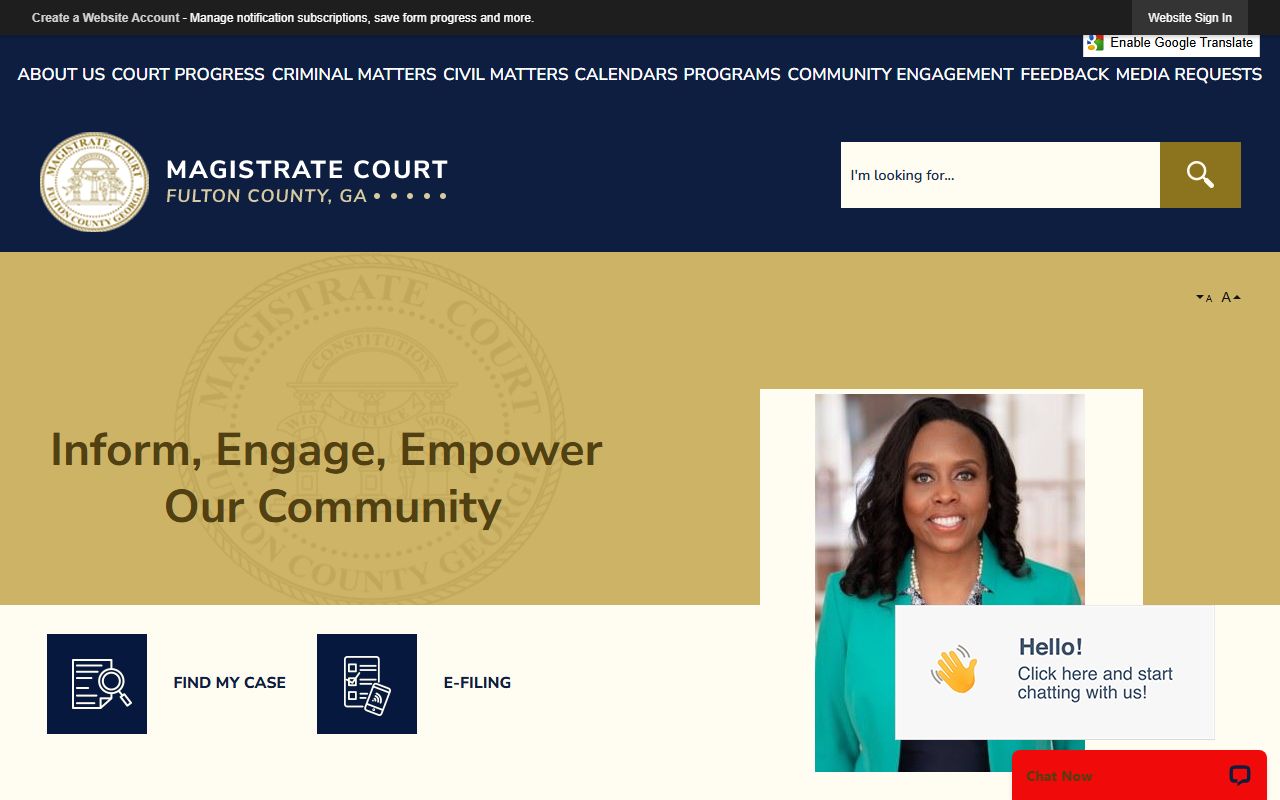
A Magistrate hearing does not replace a Superior or State Court trial. Magistrate is the entry point for many cases that later move to a higher court for trial. Records of Magistrate filings sit with the same Clerk that handles Superior Court files.
Common Questions About Fulton County Court Records
Where do I search Fulton County court records online?
Start at the Fulton Clerk's eServices page and choose Smart Search on the Tyler Portal. Smart Search is the public index for Superior and Magistrate Court cases. For traffic, use the Fulton State Court traffic system. For estates and marriage licenses, use Probate Court's records office. For federal cases, use PACER. Juvenile records are not part of a general public search.
Is the Fulton Clerk portal free?
Public case-index search is free. Some features cost money or need a sign-in. Certified electronic copies through eCertification carry a fee. Re:SearchGA may require a registered account for full use. A free index hit is not the same as a certified document, so plan ahead if a third party needs a sealed and signed copy from the Clerk.
What is the difference between Superior Court and State Court?
Superior Court is Georgia's main trial court. It hears felonies, divorce, equity, title to land, and most major civil cases. State Court is a separate county court for misdemeanors, traffic cases, and many civil suits. Both are downtown, but they have different judges, different filing rules, and different fee schedules, so the right court depends on the case type and amount.
Does Fulton County have a District Court?
Not as a Georgia state court. "District Court" in Fulton normally means the federal U.S. District Court for the Northern District of Georgia. The county's primary state trial court is Superior Court. Federal cases are searched on PACER, not on the Fulton Clerk portal. For a full review of the trial court system, see the Fulton Superior Court page.
More on the Fulton County Court Records FAQ page.