
Where Fulton Marriage and Divorce Records Live
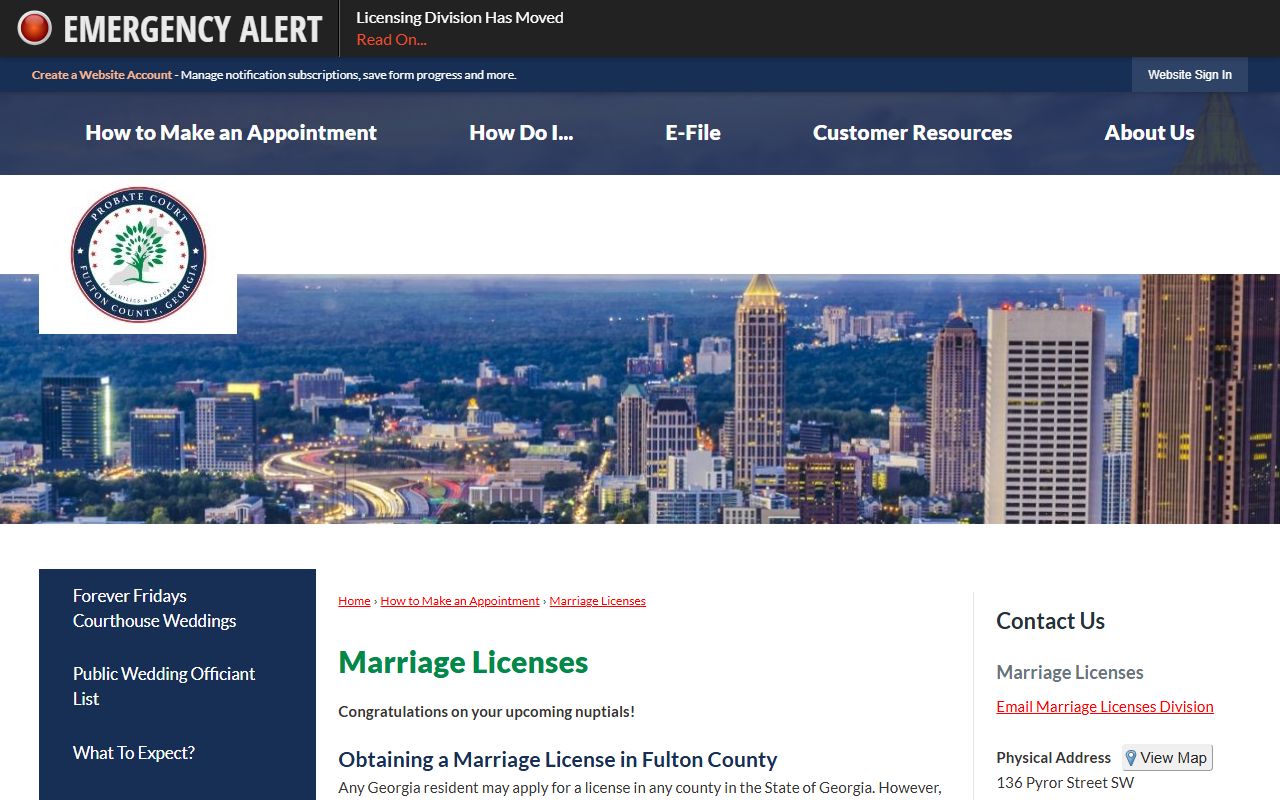
Marriage licenses and certified marriage records sit with Fulton County Probate Court. The court's marriage license page covers current application steps, hours, and accepted ID. Divorce cases sit with Fulton Superior Court Family Division, and certified divorce decrees are issued by the Clerk of Superior and Magistrate Courts. The state's DPH marriage record portal handles vital-records verification at the state level.
Note: A DPH verification is not the same as a certified court decree; a court order is the document most agencies want for legal proof.
How to Apply for a Fulton County Marriage License
Probate Court controls the marriage license application. Both applicants generally need to appear and present valid ID. The court page lists the current accepted ID list, fee, and any appointment rules. Plan ahead during peak times.
- Review the Fulton Probate marriage license page for current hours and ID rules.
- Both applicants should bring valid government photo ID.
- Be ready to share prior marriage information; divorce or death of a prior spouse must be disclosed.
- Complete the application at the counter or through any current online intake the court offers.
- Pay the license fee; premarital education may reduce the fee under Georgia law if the certificate is accepted.
- Once the license is issued, hold the ceremony with an authorized officiant.
- The officiant returns the completed license to Probate Court for recording.
- Order a certified copy from Probate Court when proof is needed.
Marriage License Application Fields
The marriage license application is short but careful. Each field maps to a state or county rule about who can marry and how the record will be kept. The table below shows the fields Fulton applicants usually fill in.
| Field Label | Type | Required | Notes / Format |
|---|---|---|---|
| Applicant 1 Legal Name | Text | Yes | Full legal name as on ID. |
| Applicant 2 Legal Name | Text | Yes | Full legal name as on ID. |
| Date of Birth | Date | Yes | For each applicant. |
| Address | Text | Yes | Residential address. |
| Identification | In-person proof | Yes | Valid government photo ID; check the Probate page for the current list. |
| Prior Marriages | Text / Checkbox | If applicable | Divorce or death of prior spouse must be disclosed. |
| Premarital Education | Certificate | Optional | May reduce the license fee if the certificate is accepted. |
| Contact Information | Phone / Email | Yes | For application communication. |
| Signature / Oath | Signature | Yes | Both applicants must sign. |
Marriage and Divorce Record Fees
The current marriage license fee is posted on the Fulton Probate site and may differ for applicants with an accepted premarital education certificate. The Clerk of Superior Court fee schedule covers divorce filing and certified divorce decree copies under the same rules used for other Superior Court records.
| Item | Amount |
|---|---|
| Fulton Superior Court divorce filing | $223.00 |
| Certified divorce decree, first page | $2.50 |
| Certified divorce decree, each added page | $0.50 |
| Plain copy, no clerk help | $0.50 per page |
| Plain copy, clerk assisted | $1.00 per page |
| Marriage license fee | Verify current amount on the Fulton Probate marriage page |
| DPH marriage record verification | Verify current fee on the Georgia DPH page |
Fulton Divorce Filing and Family Division
Divorce cases in Fulton County are filed in Superior Court. The case routes through Family Division, which also handles custody, child support, legitimation, and modifications. The Family Division page covers division contacts and standing orders. Service rules, parenting plans, and child-support worksheets follow Georgia statutes and court rules.
A divorce filing fee is set by the Clerk's fee schedule. Once a final decree is entered, the Clerk's eCertification system can issue a certified copy. A divorce verification through the state Department of Public Health is a different product and may not satisfy a recipient that needs the actual court order.
Getting a Certified Fulton Divorce Decree
The Clerk of Superior and Magistrate Courts handles certified court copies. The Acquire Copies page covers eCertification. Once payment is processed and the document is identified, the Clerk emails an authentication link tied to the order. A plain copy is fine for personal records, but a certified copy is what most third parties accept as legal proof.
Older divorce decrees may be archived and need a file pull. The Fulton Clerk file request form covers the manual route. Provide the case number, parties, and approximate filing year for the cleanest result.
Georgia DPH Vital Records vs Court Records
The Georgia Department of Public Health runs a vital-records verification service. For marriages, the agency confirms that a license was issued and returned in the state. For divorces, the state offers a verification service when records have been reported to the state. The state vital-records side is faster for simple confirmation, but it does not replace the certified court product for legal proof.
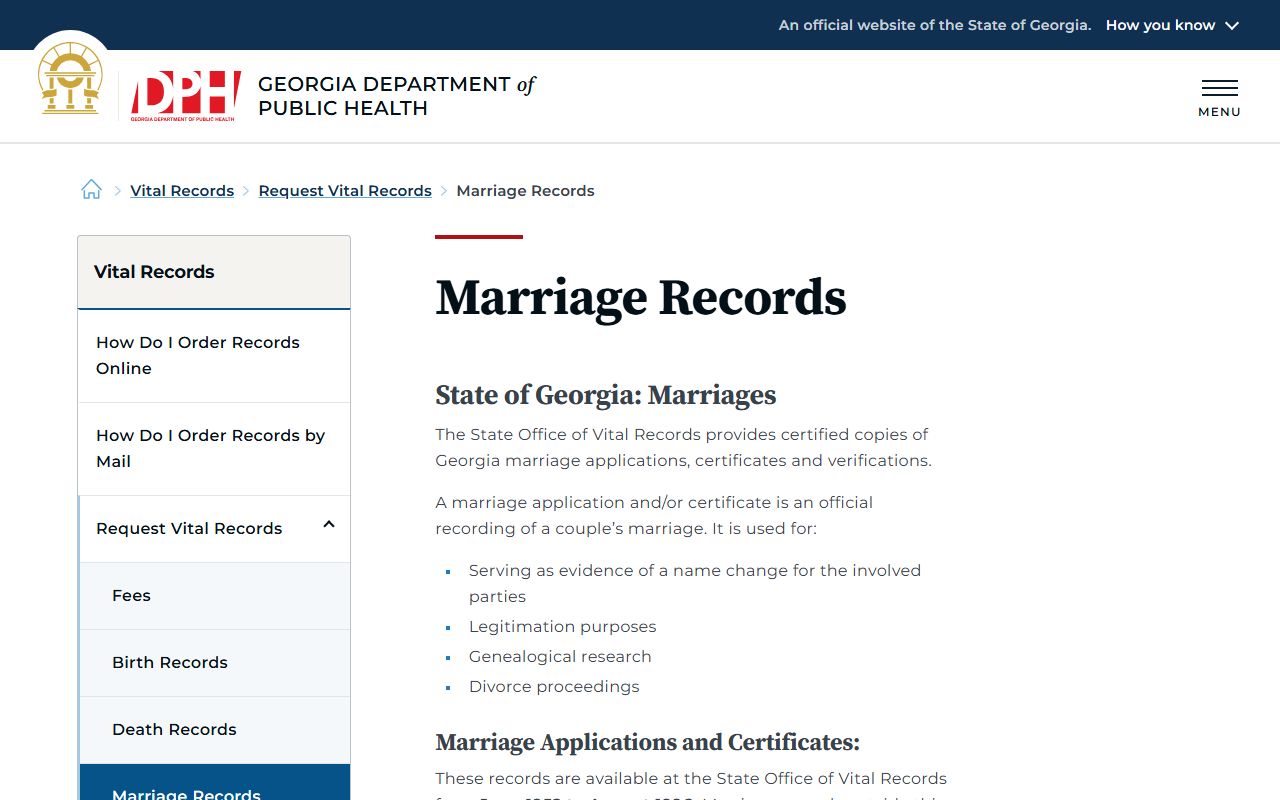
When a court, employer, school, or licensing agency asks for a "certified" copy, the request usually means the court-issued document, not the DPH verification. If in doubt, ask the recipient which format they accept before paying for the wrong product.
Restricted Family Information
Divorce dockets and final decrees are usually public, but some parts of a Fulton family case are not. Financial affidavits, child-support worksheets, minor names, victim addresses, and sealed exhibits can be redacted or held back. Adoption records are confidential under Georgia law. Family violence protective orders may include safety information that the court protects.
If a record is sealed, the route to access it is a motion in the case. The Clerk's office cannot lift a sealing order on its own. A person seeking access to a restricted family file should speak with a family law attorney about the right legal grounds.
Family Self-Help and Legal Aid
Family cases in Fulton can be filed without an attorney, but the rules are detailed and mistakes can slow the case. The Georgia Administrative Office of the Courts publishes self-help resources. Atlanta Legal Aid Society and Georgia Legal Aid handle civil matters for eligible low-income clients. The State Bar of Georgia runs a public referral service.
Family violence protective orders are a separate, time-sensitive track. The Superior Court Family Division page covers the process. Always seek legal help early if children, safety, or housing is part of the case.