
How to Search Fulton County Arrest Records
The right portal depends on the stage of the case. For a current booking, use the Sheriff's Fulton Jail Manager inmate search. For a charged case after first appearance, use Fulton Clerk eServices and Smart Search. For a statewide background check, use the GBI criminal history process. Each system shows part of the picture and not the whole.
Before you start, gather the person's full legal name, date of birth if known, and the booking or case number if printed on a notice. A search by exact name and birth date cuts down on false matches.
- Open the Fulton Jail Manager and enter the last name and first name.
- If the person is no longer in custody, switch to Smart Search for the court file.
- Match the case row by court, charge type, and filing year.
- Open the case to read the docket, bond, plea, and disposition.
- For state-prison status, use the Georgia DOC offender query. For federal, use the BOP locator.
- For a sealed or record-restricted case, expect a limited result; some entries will not appear.
The Path of a Fulton County Criminal Case
A Fulton case usually moves through several stages. Arrest happens first. Booking enters the person into the jail roster. A first appearance is set within a short period in front of a magistrate. The court reads the charge and sets bond when the law allows. The prosecutor then decides whether to file an accusation or seek a grand jury indictment. Once a charge moves forward, the case routes to State Court for misdemeanors or Superior Court for felonies.
Case flow: Arrest › Booking › First Appearance (Magistrate) › Accusation or Indictment › Arraignment › Plea or Trial › Sentence or Dismissal › Appeal.
Each step adds a docket entry that the public can read. A bond posting may not end the case; a plea is not always a conviction; and a dismissal is not the same as a record restriction. The next sections walk through these splits in plain English.
Charges vs Convictions in Fulton County Records
The biggest mistake users make is reading a charge as a conviction. A charge is the state's claim. A conviction is the court's finding. Many Fulton cases end without a conviction even when an arrest was made. The table below shows the key splits between these two ideas.
| Item | Charge | Conviction |
|---|---|---|
| What it means | The state's accusation under a statute | The court's finding of guilt after plea or trial |
| Where it shows | Jail booking, accusation, indictment, first docket entries | Final order, sentence, judgment, certified disposition |
| Proof needed | Probable cause | Guilty plea or proof beyond a reasonable doubt |
| Effect on public record | Filed but not final; can change with plea or dismissal | Permanent unless restricted, sealed, or pardoned |
| Where to confirm | Jail roster and Smart Search docket | Certified disposition from the Clerk of Superior Court |
Note: For employment, school, or licensing use, ask the Clerk for a certified disposition rather than printing a docket screen.
Sealed Records vs Restricted Records in Georgia
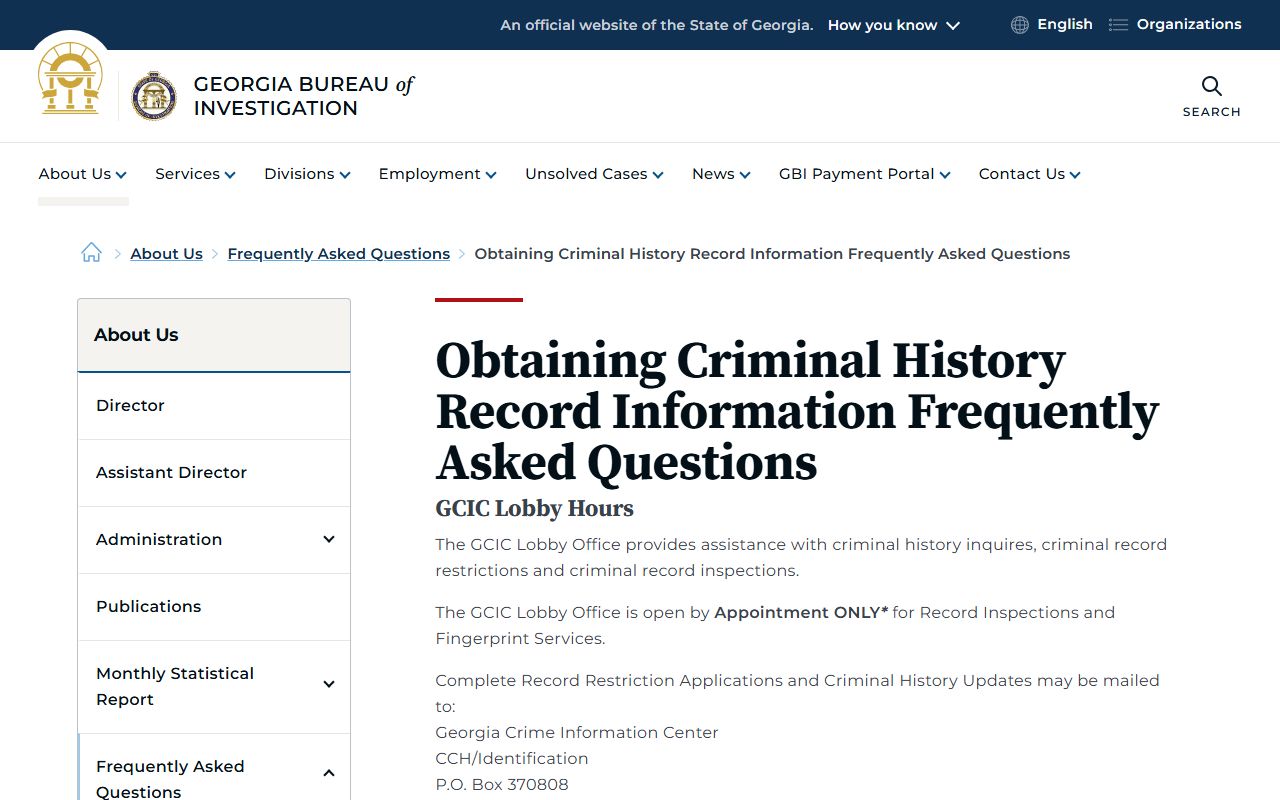
Georgia does not use the word "expunged" the way some other states do. The state's main tool is "record restriction" under O.C.G.A. § 35-3-37. A restricted record is not part of public background checks, but it still exists for law-enforcement use. A "sealed" court record is closed by a judge through an order in the case. Both tools limit access, but the route to each is different. The table below maps the split.
| Tool | Record Restriction | Sealing |
|---|---|---|
| Authority | O.C.G.A. § 35-3-37 (GBI / GCIC) | Court order from the judge in the case |
| Who decides | Arresting agency, prosecutor, GBI, or court depending on case | The judge in the case |
| Best for | Arrests with no prosecution, dismissals, acquittals, some convictions | Specific court files that need full closure |
| Public effect | Removed from GBI public dissemination | Removed from public court view |
| Law enforcement | Can still see the record | Can usually see the record |
The state framework is described in the GBI criminal history FAQ, which is the right starting point for restriction questions.
Felony and Misdemeanor Records in Fulton
Felony cases route to Superior Court. The court can sentence a person to prison time under Georgia law, and the case file is held by the Clerk of Superior and Magistrate Courts. Misdemeanor cases route to State Court or, for city offenses, to a municipal court. The Clerk's portal shows Superior and Magistrate cases, but municipal records sit with each city's court.
Fulton County also runs accountability courts that combine treatment with judicial review. Drug Court and Mental Health Accountability Court are common paths for eligible defendants. The Fulton accountability court page covers the behavioral-health program. Treatment court records still appear on the criminal docket, but the path to a final outcome is different.
Fulton County District Attorney
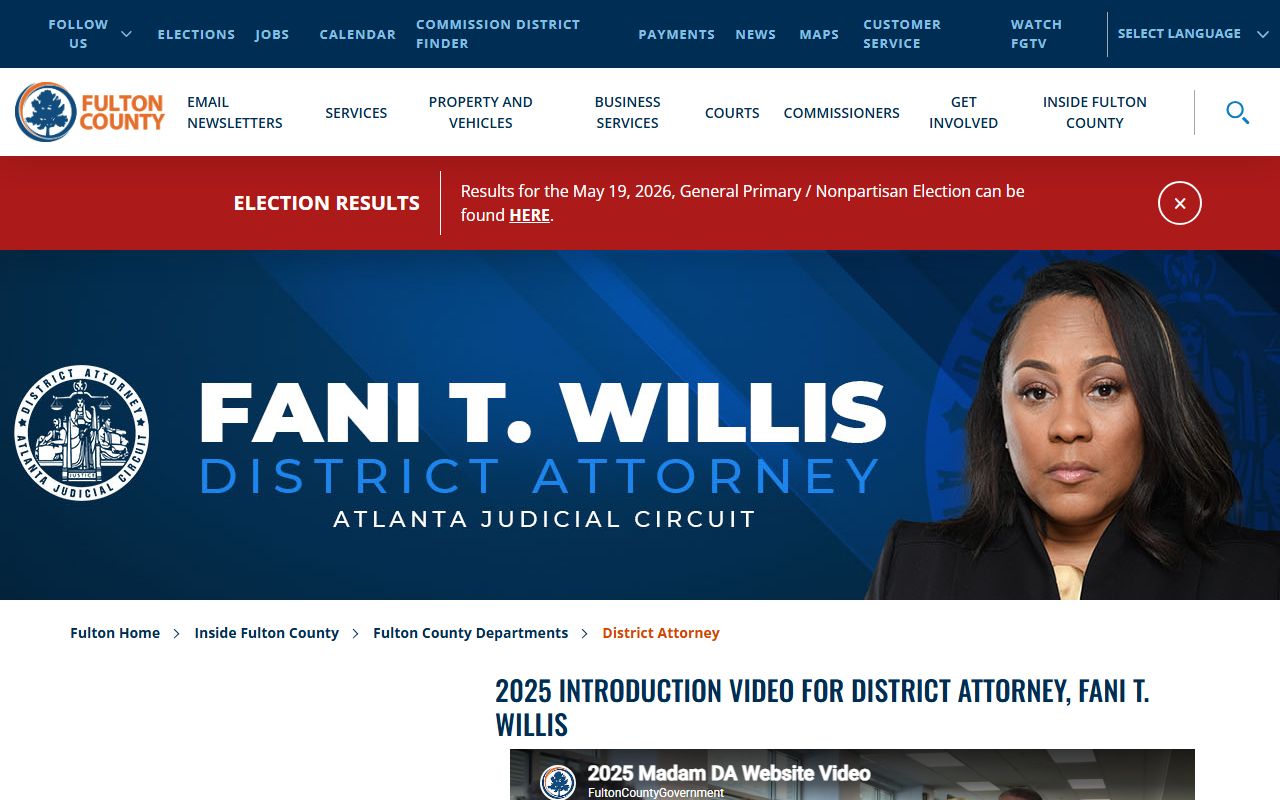
The District Attorney decides whether to bring a felony charge after arrest. The office runs grand jury work, plea negotiations, trial prosecutions, victim services, and appellate cases. Felony arrests in Fulton County are reviewed by the DA's office before the case moves to indictment or accusation. The Fulton County District Attorney page is the official source for office news and contacts.
Victim-witness assistance is part of the DA's work. The office can help with notice of court dates, victim impact statements, restitution, and safety planning. State victim compensation is run at the state level and is a separate process from any criminal court case.
Public Defender and Legal Help
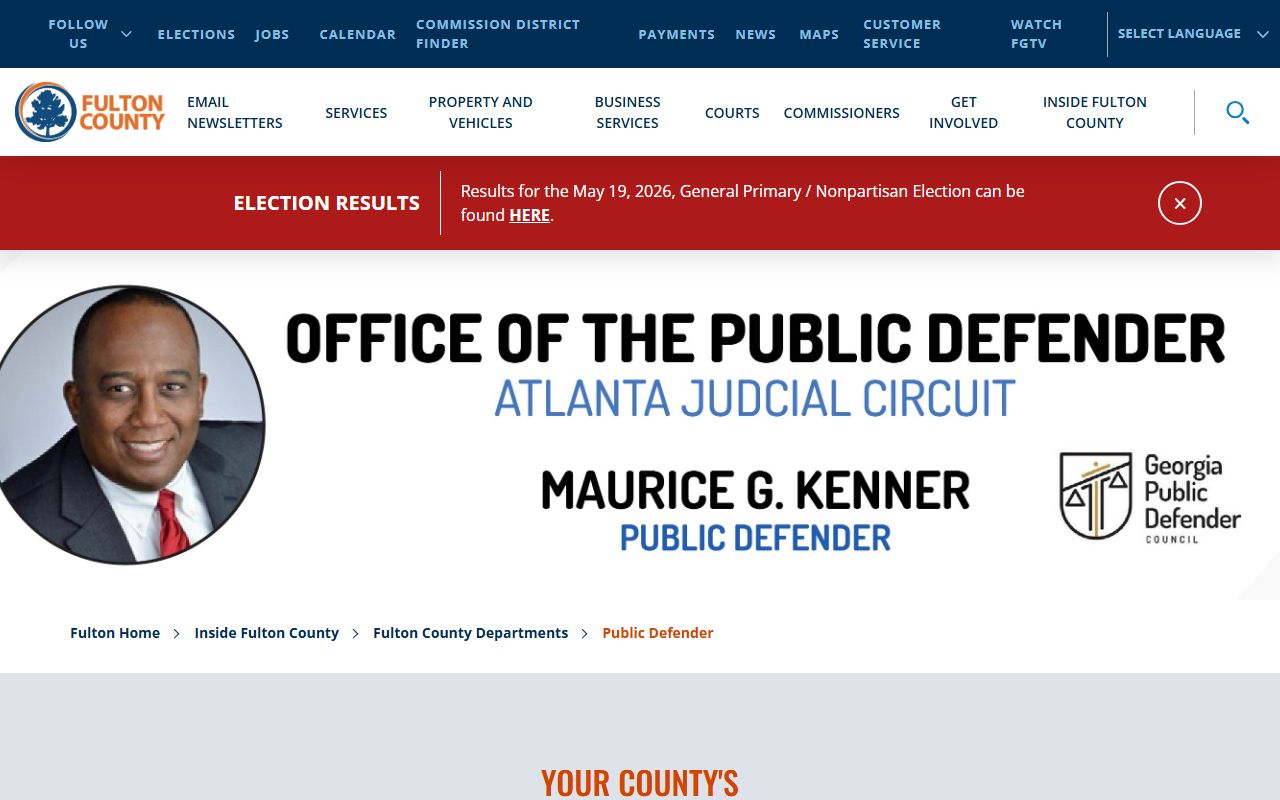
The Fulton County Public Defender's Office provides indigent defense to people who qualify. Appointment runs through the court after a financial review. The Fulton County Public Defender page is the official starting point. People who do not qualify for a public defender can use private counsel or local legal aid.
Lawyer referral and self-help resources are also useful. The State Bar of Georgia runs a public referral service, and Atlanta Legal Aid Society and Georgia Legal Aid handle civil matters that may tie back to criminal cases, such as housing or family issues during a criminal case.
GBI Criminal History Reports
A court docket and a Georgia background check are not the same thing. The Georgia Bureau of Investigation, through the Georgia Crime Information Center, compiles statewide criminal-history records. A person who wants a full Georgia background check goes through the GBI process, often with fingerprints and a fee, rather than printing a docket from the Clerk's portal.
The official GBI criminal history FAQ covers who can request a record, what is included, and how restriction affects what shows up. Employers, schools, and licensing boards often need the GBI product, not a county-court print.
Georgia Sex Offender Registry
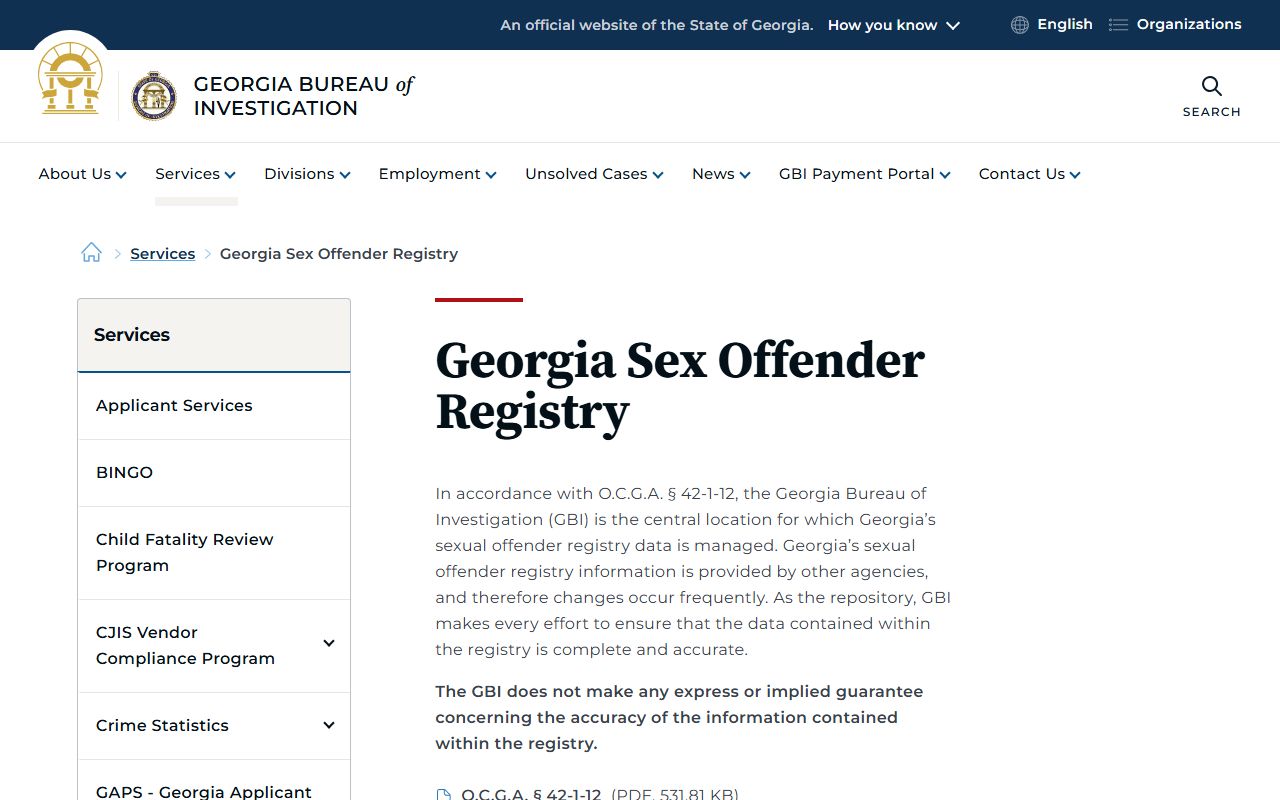
The Georgia Sex Offender Registry is run by GBI and is open to the public. Search options include name, county, city, ZIP code, and address radius when enabled. A profile may show photo, address, conviction, vehicle, and employer fields when those parts are public.
The Georgia sex offender registry page is the right starting point for a Fulton County address search. Use the official tool rather than a private aggregator; private sites may use stale data and they do not control the underlying registry.
Bond, Warrants, and First Appearance
After arrest, a magistrate hears the case at first appearance and reads the charges. The judge may set a cash, surety, property, or recognizance bond. Some charges allow no bond at first appearance because of the offense level or a prior order. Bond rules sit in O.C.G.A. § 17-6-1 and related sections. Arrest authority and warrant rules sit in O.C.G.A. § 17-4-20 and related sections.
For active warrants and the route to clear a warrant, see Fulton County warrant records. For current jail custody and booking data, see Fulton County inmate records. The jail roster shows the charge, but the court docket is the place to read the disposition.
Record Restriction and Cleaning a Fulton Record
Eligibility for record restriction depends on the charge, the outcome, and the time since the case ended. Some non-prosecuted arrests qualify. Some dismissals qualify. Some convictions qualify only after a waiting period and only if the offense type is not excluded. The process may start with the arresting agency, the prosecutor, the GBI, or a court petition depending on the date and type of case.
A successful restriction limits public dissemination, but it does not erase the record for police and prosecutors. For court files that need full closure, a sealing motion in the case is the right tool. Both routes can require legal help, especially when a case has multiple counts with different outcomes.